
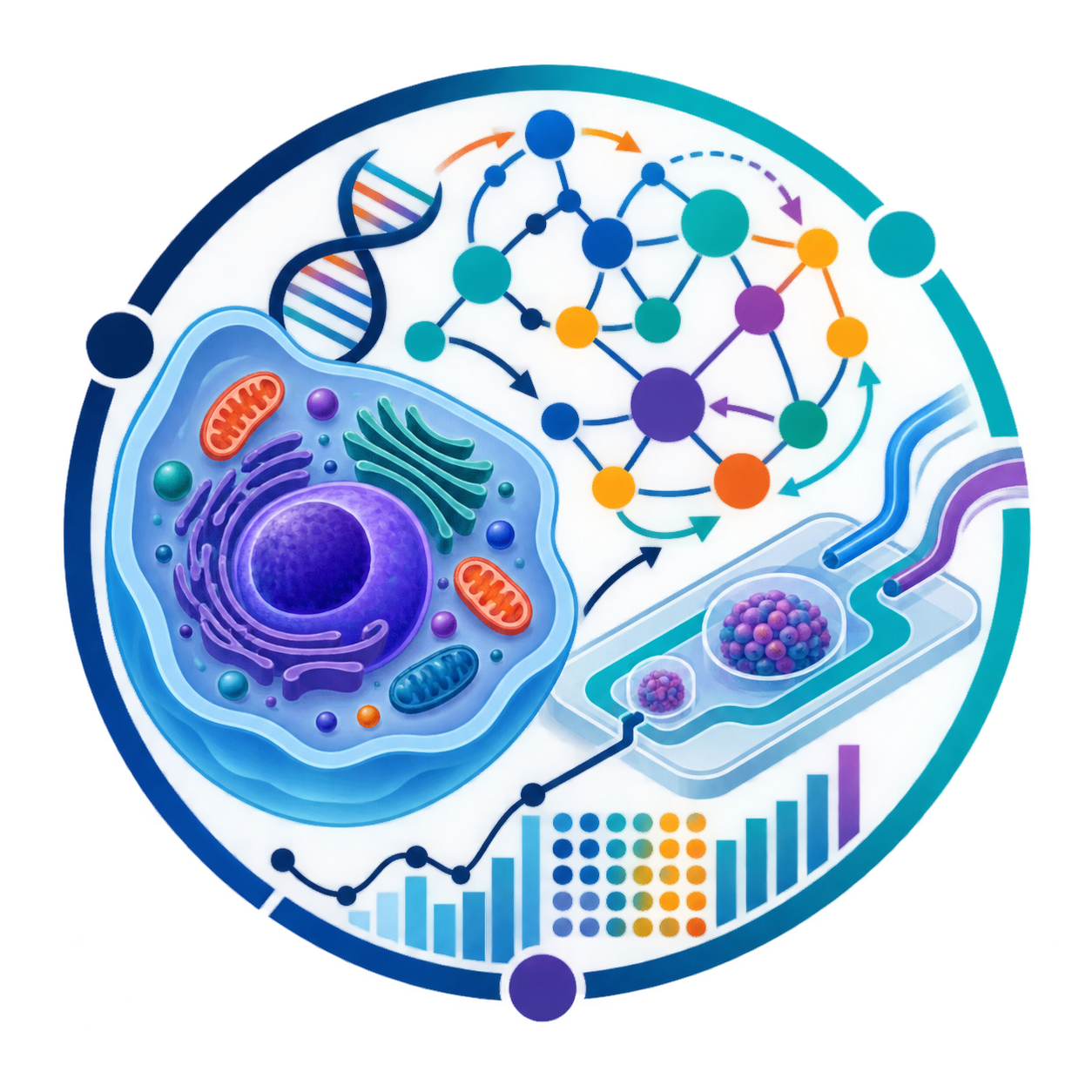
1. Introduce students to Cellular systems engineering, their constituents, and functions.
2. Understanding how molecules interact to form complex functional systems.
3. Explore experimental approaches for the design of complex biological systems (artificial
cellular niches, organoids, organ-on-a-chip).
4. Present and analyze omics and computational tools for data analysis.
5. Address mathematical concepts for modeling complex biological systems and network
analysis.
Upon successful completion of this course, students should be able to:
6. Identify and understand the main methodologies used to characterize complex systems in
modern bioengineering and biomedicine.
7. Apply and critically discuss current needs and limitations of multi-scale data integration to
represent biological systems.
8. Understand different omics approaches to characterize and interpret of biological systems.
9. Critically evaluate these approaches in Precision Medicine, disease Biomarker discovery,
and the development of Biomedical Technologies.
- Criador de disciplinas: Nuno Bernardes